A front door is asked to do far more than close an opening. It introduces the architecture, protects the home, frames the arrival experience and must withstand years of sun, rain and daily use. The right door materials give a design its presence, while the wrong choice can leave even a beautiful entrance looking tired before its time.
For a custom door, material selection should never be an afterthought. Proportion, finish, climate exposure, hardware and the way the door moves all influence which material will perform best. A statement pivot door, for example, places different demands on its construction than a light internal sliding door or a traditional pair of French doors.
Door Materials for Exterior Doors
Exterior doors need to balance visual impact with resilience. In South Africa and neighbouring regions, strong sunlight, sudden rain, temperature shifts and airborne dust can all affect a door’s finish and long-term stability. The most successful choice considers the elevation of the property as carefully as the style of the home.
Timber: warm, distinctive and naturally expressive
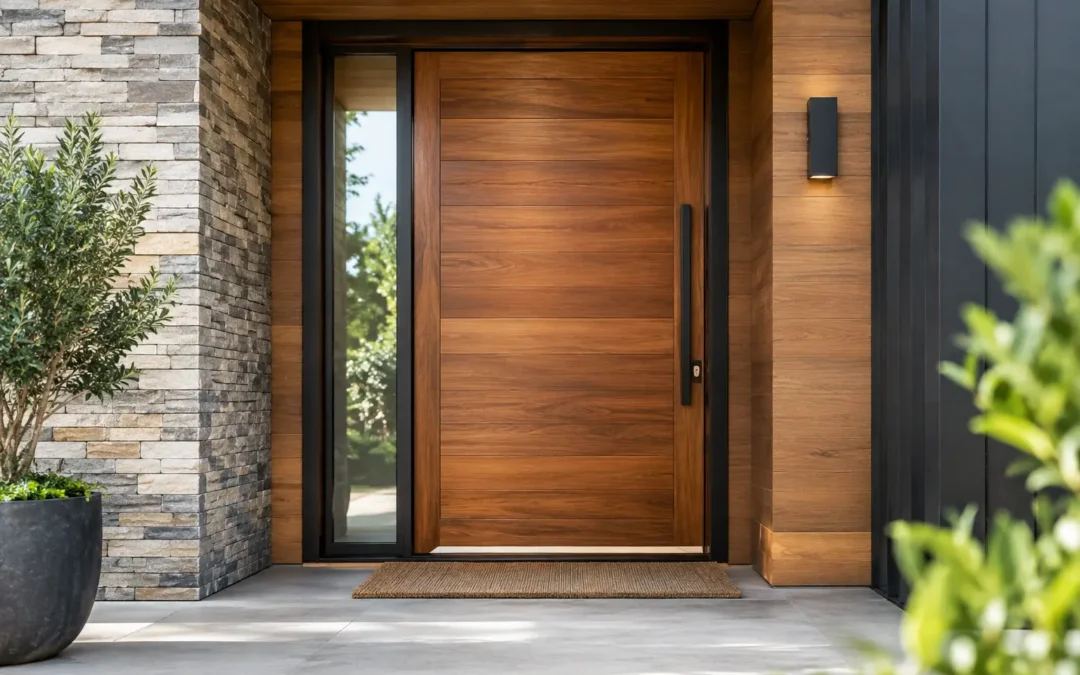
Timber remains one of the most admired materials for entrance doors because no two pieces are exactly alike. Grain, tone and texture bring depth to a façade, whether the design is clean-lined and contemporary or more traditional in character. A beautifully crafted timber pivot door can make an entrance feel substantial without appearing cold or overworked.
Its appeal lies in the details. Timber can be shaped, grooved, panelled, inlaid or paired with glass and metal to create a door with genuine architectural identity. It is also well suited to bespoke dimensions, allowing the design to follow the scale of a double-volume entrance, wide opening or dramatic vertical threshold.
However, timber needs correct specification and ongoing care. Quality hardwoods, stable engineered construction and suitable protective coatings are essential, particularly on exposed elevations. A covered entrance will place less pressure on the finish than a west-facing door that receives intense afternoon sun. Maintenance is not a disadvantage when it is planned for – it is part of preserving a natural material at its best.
Aluminium: crisp lines and low-maintenance confidence
Aluminium suits contemporary architecture particularly well. It offers slim, precise profiles and can be powder-coated in a wide range of colours, from soft neutral tones to near-black finishes that sharpen a modern façade. It is also a practical choice where low maintenance, moisture resistance and consistent colour are priorities.
For doors incorporating larger glazed areas, aluminium provides a strong and refined framework. It works especially well for sliding systems, glazed entrance doors and designs where the opening should feel light rather than solid. Its appearance is more controlled than timber, which can be an advantage in minimal homes with stone, concrete, steel or large-format glazing.
The trade-off is that aluminium can feel less tactile on its own. This is why it is often most effective when considered as part of a wider material palette. Paired with timber, textured glass or carefully selected hardware, it can retain its clean architectural character while gaining warmth and detail.
Steel: strength with an industrial edge
Steel is chosen for its exceptional strength and striking visual weight. It can support bold designs, narrow framed glazing and oversized openings with confidence. Used thoughtfully, it brings a sense of permanence to a home, commercial entrance or internal transition.
A steel-framed door can be elegant rather than overtly industrial. Fine profiles, considered glazing divisions and a deep painted finish can create a sophisticated result, particularly in homes that combine contemporary architecture with heritage-inspired elements. Steel is also valuable where security is a leading consideration.
Because steel requires careful protection from corrosion, the finish and fabrication quality matter greatly. Proper preparation, coating and detailing around joints are vital, especially in wet or coastal conditions. It is a material that rewards precision at every stage, from design through installation.
Glass: light, openness and controlled privacy
Glass transforms how a door connects spaces. At an entrance, it can bring daylight into a darker hallway and create a welcoming sense of openness. Internally, it can divide rooms without cutting off sightlines or making a home feel smaller.
Clear glass offers the most visual connection, while frosted, fluted, tinted or textured glass can provide privacy without sacrificing light. The choice should respond to the setting. A private garden-facing entrance may benefit from broad clear panels, while a street-facing door may need obscured glazing or a more selective arrangement of glass.
Safety glass and appropriate hardware are non-negotiable. On exterior doors, glazing should also be specified with thermal comfort, security and solar exposure in mind. A large glass panel may look effortless, but its performance depends on the quality of the glass, frame and installation.
Choosing Door Materials for Interior Spaces
Interior doors have fewer weather-related demands, but they carry enormous influence over the atmosphere of a home. They can make a passage feel quiet and private, draw attention to a carefully framed room or bring rhythm to a long corridor. Material selection should support the wider interior scheme rather than compete with it.
Solid or veneered timber doors bring warmth to bedrooms, studies and living spaces. A natural oak or darker timber finish can echo bespoke furniture, flooring or vanity units, creating continuity from one room to the next. Painted timber is equally versatile, offering a softer and more tailored look when colour is part of the design language.
For homes that need more light between rooms, glass-panelled doors or slender steel-framed partitions can be particularly effective. They suit kitchens, studies, passageways and entertainment areas where separation is useful but enclosure is not always desirable. In quieter spaces, a more solid door construction can improve acoustic privacy and give the room a greater sense of retreat.
The opening style matters as much as the surface. A pivot door can create a sculptural focal point, while a sliding door saves floor space and can disappear discreetly beside a wall. Double doors add ceremony to wider openings, and French doors introduce a lighter, more classic character. The material should support the movement and weight of the design, not simply its appearance.
Combine Materials for a More Personal Design
Some of the most memorable doors are not made from one material alone. Timber and glass can soften a grand entrance. Steel and glass can define a contemporary interior. Aluminium framing can introduce clean structure around a richly grained timber panel. These combinations create contrast, but they should be resolved with restraint.
The key is to give each material a purpose. Timber may provide warmth, glass may admit light, and metal may supply structural clarity or a darker accent. When every element is competing for attention, the door can feel busy. When each has a clear role, the result feels composed and enduring.
Hardware deserves the same consideration. Handles, pivots, locks and pull bars affect both usability and visual balance. A large vertical pull can reinforce the scale of an oversized pivot door, while discreet hardware may suit a minimal flush design. Finishes should relate to nearby lighting, window frames, cabinetry or bathroom fittings rather than being selected in isolation.
What Should Guide the Final Choice?
The best material is not always the most expensive one or the one currently seen most often in architectural magazines. It is the one that suits the building, the exposure, the lifestyle of the household and the intended feeling of the space.
Consider the degree of shelter at the entrance, the need for privacy, the amount of natural light, security expectations and the level of maintenance you are willing to undertake. Also consider scale. A material that looks refined on a standard-sized door may need different construction and detailing when used for a towering pivot entrance.
Custom manufacturing allows these decisions to be addressed together rather than one by one. At Pivot Doors South Africa, the material, proportion, finish and installation method can be considered as one complete design, helping the finished door feel fully at home in its setting.
A door should still look considered after countless arrivals, departures and changing seasons. Choose materials that not only suit the drawing or showroom sample, but also the life the building will ask them to live.