
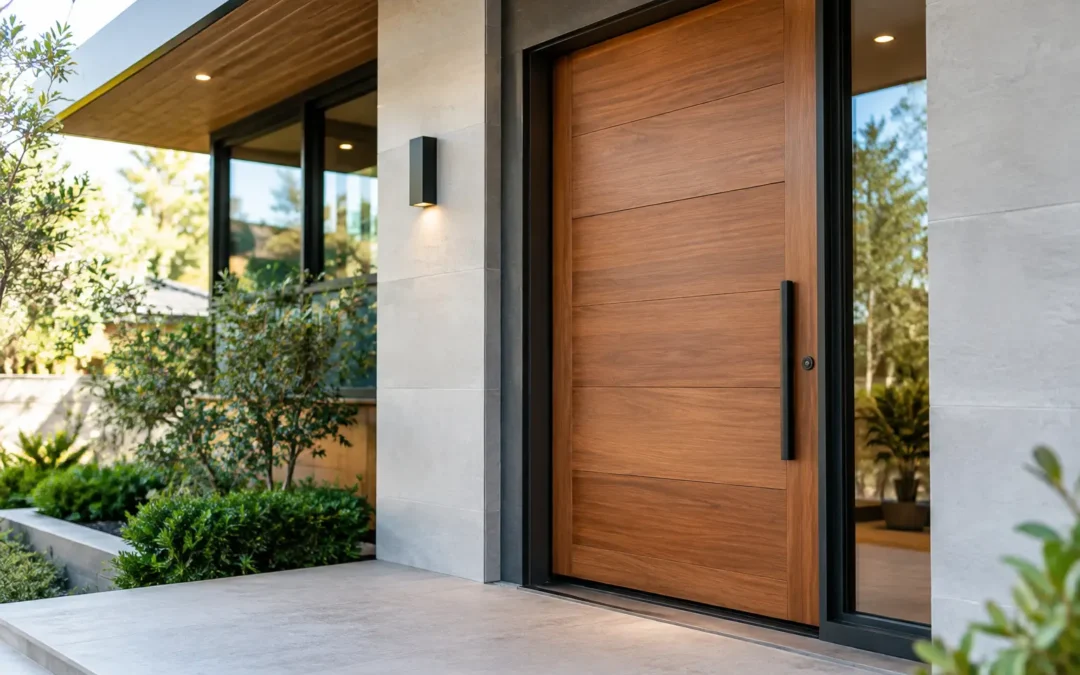
A statement entrance should never ask you to choose between presence and protection. Thoughtful door security begins well before a lock is fitted: it is shaped by the door’s construction, its frame, the hardware specified and the precision of the final installation. When these elements are considered together, security becomes part of the architecture rather than an afterthought attached to it.
For a private residence, estate home or considered commercial project, the entrance is both a point of arrival and a critical boundary. It needs to feel welcoming from the street, perform reliably every day and offer genuine reassurance when the property is unoccupied. The most successful solutions achieve all three without compromising the scale, material character or elegance of the design.
Door security starts with the complete system
A secure door is not simply a solid panel with an expensive lock. The door leaf, frame, hinges or pivot system, locking points, glazing and wall opening must work as one engineered assembly. A weakness in any one area can reduce the value of the others.
This is particularly relevant with oversized and custom entrance doors. Their proportions create visual impact, but their weight and movement place greater demands on structural support and hardware. A bespoke door should be designed around the dimensions of the opening and the way it will be used, rather than adapted from standard components after the fact.
The frame deserves equal attention. It provides the fixed foundation against which the door closes and locks. A well-made, correctly secured frame resists movement, supports accurate alignment and helps prevent gaps from developing over time. In practical terms, a quality lock can only perform as intended when its locking points meet a stable, properly prepared frame.
Material selection also affects long-term performance. Timber brings warmth and depth, while aluminium, steel detailing and carefully selected composite elements can bring strength, crisp contemporary lines or improved resistance to weather. The right choice depends on the architectural brief, exposure to sun and rain, maintenance expectations and the desired finish. There is no single material that suits every project.
What makes an exterior door more secure?
For external doors, the locking arrangement should suit the size, style and risk profile of the property. A multi-point locking system is often a considered option for larger doors because it secures the leaf at several positions along the frame rather than concentrating resistance at one central point. This can improve closing pressure and help maintain a tight, controlled fit.
Lock cylinders, handles and escutcheons should be selected as a coordinated set, with attention to quality, durability and resistance to tampering. A refined handle may be the most visible part of the hardware, but the internal mechanism and its correct fitting are what determine how confidently it performs. It is worth specifying hardware early, especially where custom pull handles, electronic access or unusual door thicknesses are involved.
Hinged doors require suitably rated hinges and reinforced fixing points. Pivot doors require an equally deliberate approach. Their distinctive movement comes from a pivot mechanism positioned at the top and bottom of the door, not conventional side hinges. When correctly specified for the door’s weight, width and finish, the system can support a dramatic entrance while maintaining controlled operation and secure closure.
The pivot mechanism alone does not define security. The real result lies in the complete detail: a stable frame, precise clearances, suitable locking, correctly positioned strike plates and experienced installation. This is why a custom solution is valuable. It allows the aesthetic ambition of the entrance to be resolved alongside the technical requirements, rather than treating them as competing priorities.
Glass can be elegant and considered
Glazed panels, sidelights and fanlights can transform an entrance by bringing natural light into a hall and creating a stronger connection between interior and exterior. They should be specified with the same care as the door itself.
The appropriate glass choice depends on location and design. Safety glazing is essential where impact is a consideration, while laminated glass can provide an additional layer of retention if broken. The framing method, beading detail and how the glass is integrated into the door all matter. Large expanses of glazing may call for a different solution from a small decorative vision panel.
Privacy is another part of the decision. Obscured, textured or strategically positioned glazing can admit light without placing the interior on display. A secure entrance should support the way a home is lived in, not make it feel closed off.
Design security into the approach to the home
Door security does not begin at the threshold. Sightlines, lighting, landscaping and access routes influence how exposed or protected an entrance feels. A recessed doorway, for example, may need carefully placed lighting so visitors can be identified clearly after dark. A deep overhang can protect timber and hardware from harsh weather, extending the life of both the finish and the mechanism.
For properties in South Africa, where strong sun, seasonal rain and temperature changes can affect exterior materials, durability is inseparable from security. A door that swells, warps or falls out of alignment may become difficult to lock properly. Selecting suitable materials, finishes and seals for the site helps preserve both appearance and performance.
Electronic access can be a useful addition where it suits the household or project. Video intercoms, keypad entry, smart locks and access control may offer convenience for busy families, guest accommodation or commercial spaces. Yet technology should complement dependable physical construction, not replace it. Consider how the system will operate during power interruptions, who needs access and whether it can be serviced locally.
Installation is where the detail proves itself
Even an exceptional custom door can underperform if it is installed without precision. The opening must be assessed accurately, the frame set square and secure, and the door adjusted so it moves freely before engaging the locking system cleanly. On a large pivot door, small inaccuracies can become apparent in the gap lines, closing action and long-term alignment.
Installation should also account for finishes around the opening. Floor levels, thresholds, cladding, plaster lines and drainage can all affect how an exterior door performs. Water management is especially important: directing water away from the threshold protects the door assembly and reduces the risk of damage to surrounding finishes.
After installation, test the door in the way it will actually be used. Open and close it from both sides, engage every lock point, check that keys or access controls operate consistently and ensure that the handle feels secure. A door should close with assurance, not require force or repeated adjustment.
Maintaining security without losing the finish
Quality doors are made to last, but they still benefit from sensible care. Periodically check that screws and hardware remain secure, keep tracks and thresholds clear of debris, and address changes in operation early. If a door begins to rub, stick or require pressure to lock, do not wait for the problem to worsen. Timely adjustment protects the mechanism and helps retain the clean lines that made the design compelling in the first place.
Exterior finishes should be maintained according to their material and exposure. Timber may need scheduled care to preserve its depth of colour and protective coating, while metal finishes and seals should be inspected for signs of wear. This is not merely cosmetic work. A well-maintained entrance is more likely to remain weather-tight, aligned and dependable.
A distinctive door can be the architectural moment that defines a property. With the right materials, considered hardware and skilled installation, it can also be the element that lets you enjoy that statement with complete confidence. Begin the conversation with the way you want the entrance to look, feel and perform for years to come – then allow every detail to be crafted around that vision.